University website accessibility, across every subdomain
Universities and schools are public sector bodies under accessibility law. Their websites sprawl like nothing else: faculties, departments, labs, legacy microsites. Askem monitors all of it weekly, so the pages nobody owns stop being the pages nobody checks.
Get your free review
Trusted by hard-working website teams


_logo.png)

What does accessibility law require from education websites?
In the UK and the EU, universities, colleges, and schools count as public sector bodies under web accessibility law (PSBAR in the UK, the Web Accessibility Directive in the EU). Their websites must meet the WCAG standard referenced by EN 301 549, publish an accessibility statement, and give users a way to report accessibility problems.
The hard part in education is scale: one institution can run hundreds of sites across faculties, research groups, and campaigns, plus intranet content that the rules also cover when published after September 2019. Compliance is not one website. It is all of them.
Last updated: July 2026
Why education teams come to us
You are in scope, and monitored
Most universities are public sector bodies under accessibility regulations. Monitoring bodies test education websites the same way they test councils, and they publish the results. 'We did not know the physics department had a site' is not a defence.
Subdomain sprawl defeats manual checking
Faculties, institutes, research projects, student unions, event microsites. Education web estates grow in every direction, and each corner can fail WCAG in its own way. Manual audits cover a snapshot of a fraction.
Inaccessible pages block real students
Course pages, enrolment forms, and reading lists that fail with assistive technology do not just risk compliance. They lock actual students out of actual education, right when disability services are already stretched.
The prospectus works. Does the rest?
Marketing pages usually get accessibility attention because they get budget. The long tail of departmental pages, PDFs, and legacy content is where the failures hide, and it is where regulators and students actually land.
Your accessibility statement needs to be true
The law requires a statement that reflects reality across your estate. Without continuous monitoring, nobody can honestly say what state hundreds of sites are in, so the statement becomes a guess.
Enterprise tools charge enterprise prices
Education budgets do not stretch to five-figure accessibility suites, and multi-domain pricing usually makes it worse. Askem covers unlimited domains, each at a small incremental cost, priced for a web team to buy directly.
How Askem supports education providers
One dashboard for the whole web estate
Askem checks every page weekly against WCAG 2.1 and 2.2 AA, across your main site and every faculty and project site you add. Unlimited domains, each at a small incremental cost.
Issues are ranked and explained in plain language, so a central web team can route fixes to the right department without being accessibility lawyers.

Understand student journeys without consent banners
Askem's cookieless analytics collects no personal data, so it needs no consent banner and works cleanly under GDPR, on every site in your estate.
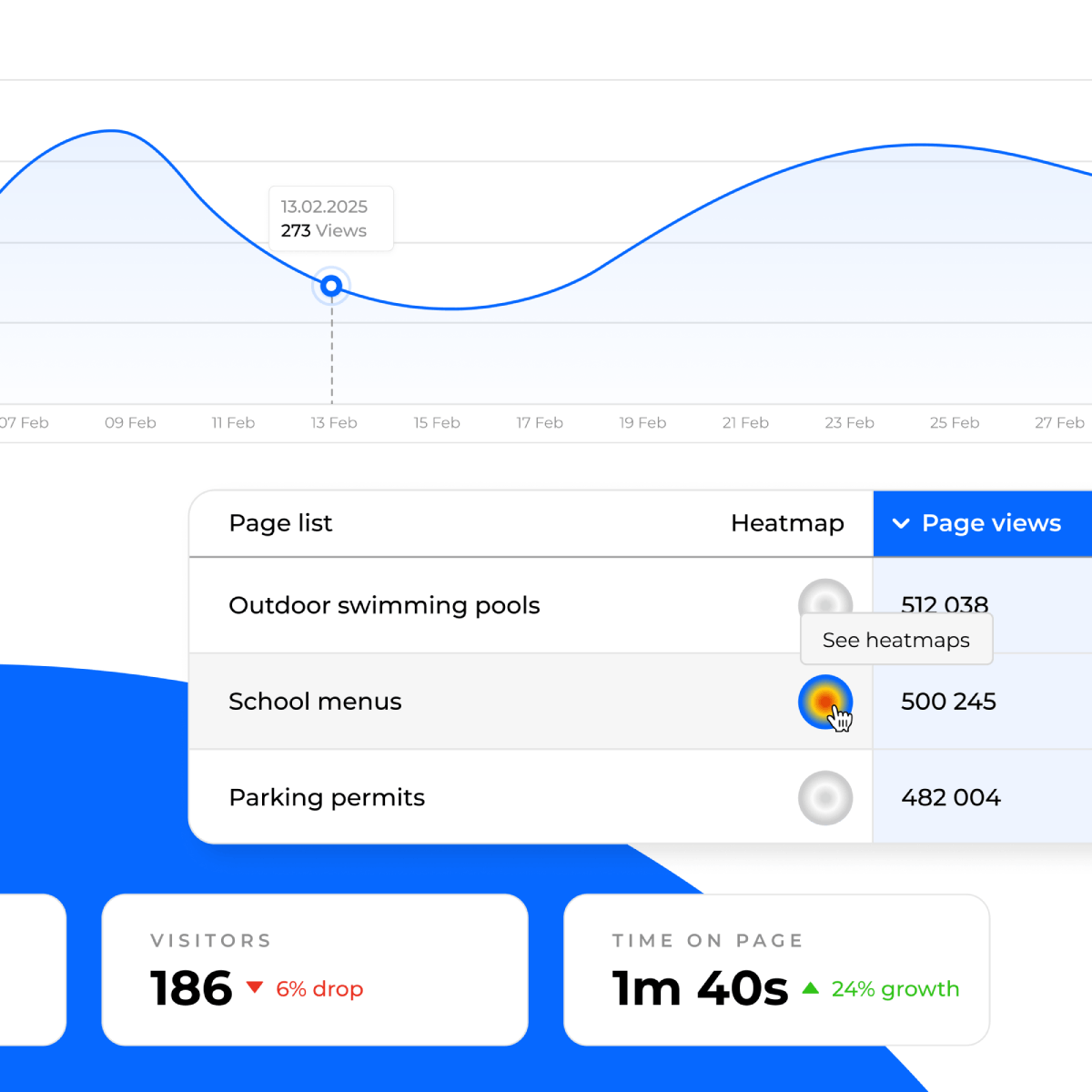
See which course pages convert applicants, where enrolment journeys break, and which departmental content students actually use.
Let students flag what the audit missed
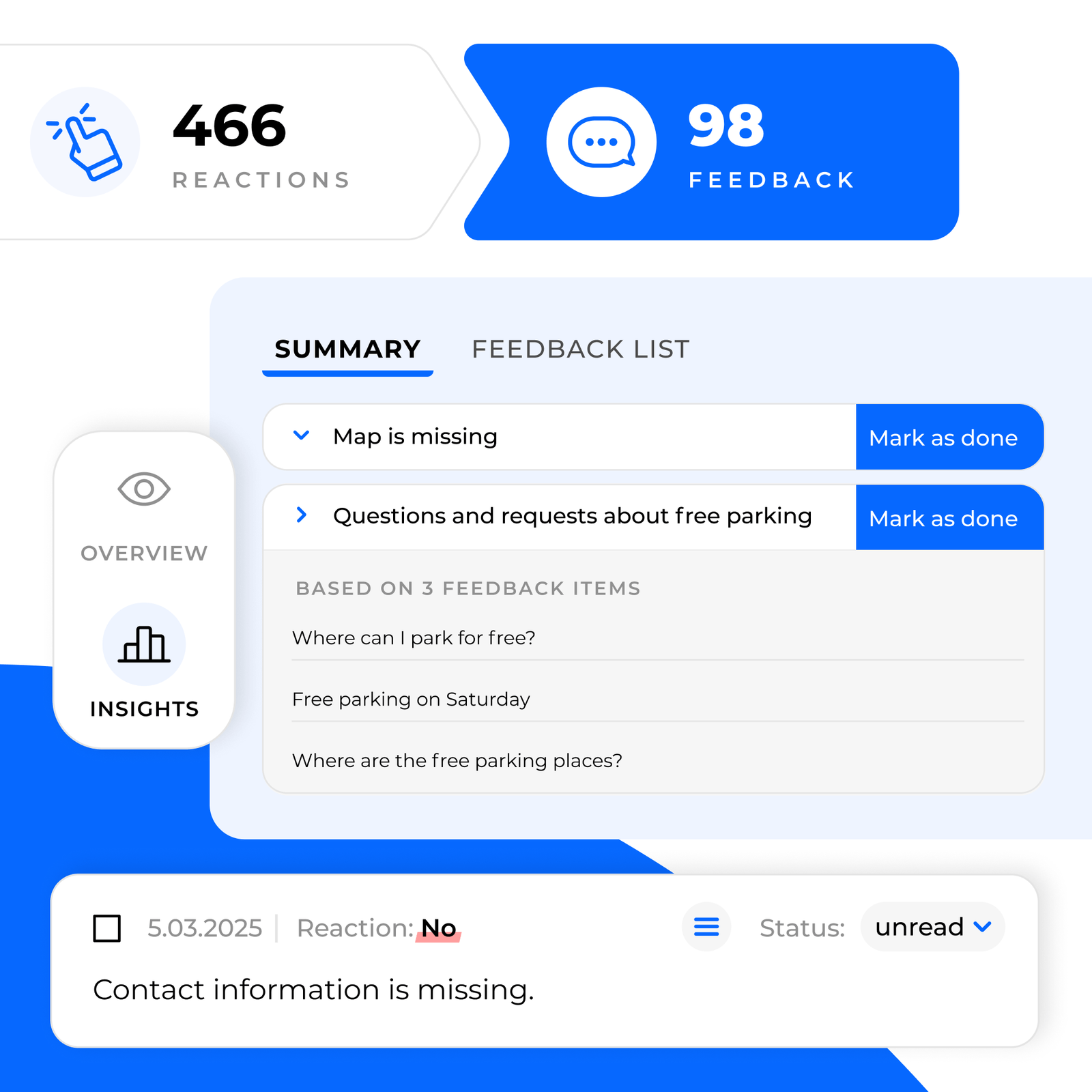
An accessible feedback widget on every page lets students and staff report barriers the moment they hit one, and satisfies the feedback mechanism accessibility law requires.
Typical sites collect 10 to 25 reactions per 1,000 page views, which turns your users into a continuous testing team.
Compliance and data protection
Weekly WCAG 2.1 and 2.2 AA monitoring across main sites, faculty sites, and microsites. Unlimited domains.
Accessibility statement support with live data from your whole estate.
A statutory-grade feedback channel for students and staff on every page.
GDPR-compliant, EU-hosted data. Monitoring from 199€ a month, analytics from 75€.
Free accessibility check
Trusted by leading organizations
“We cut manual accessibility audits by over 80% and maintain continuous WCAG 2.1 AA compliance across all patient portals.”
Ben O'Connell
Digital Accessibility Lead
NHS Northumbria

“We use Askem every day to improve the digital customer experience. It gives us visibility we never had before and helps us react to user feedback instantly.”
Marjo-Riitta Mustonen
Lead Digital Concepts
DNA Oyj
“I recommend Askem to everyone working with websites or transactional services. It's become our go-to tool for continuous accessibility and service quality monitoring.”
Arttu Huittinen
Development Manager
HSY

“With the analytics we used before, we always had to guess what worked. Askem finally shows where users struggle and why, so we can improve content confidently.”
Hanna Loraine
Content Manager
Uniarts Helsinki